
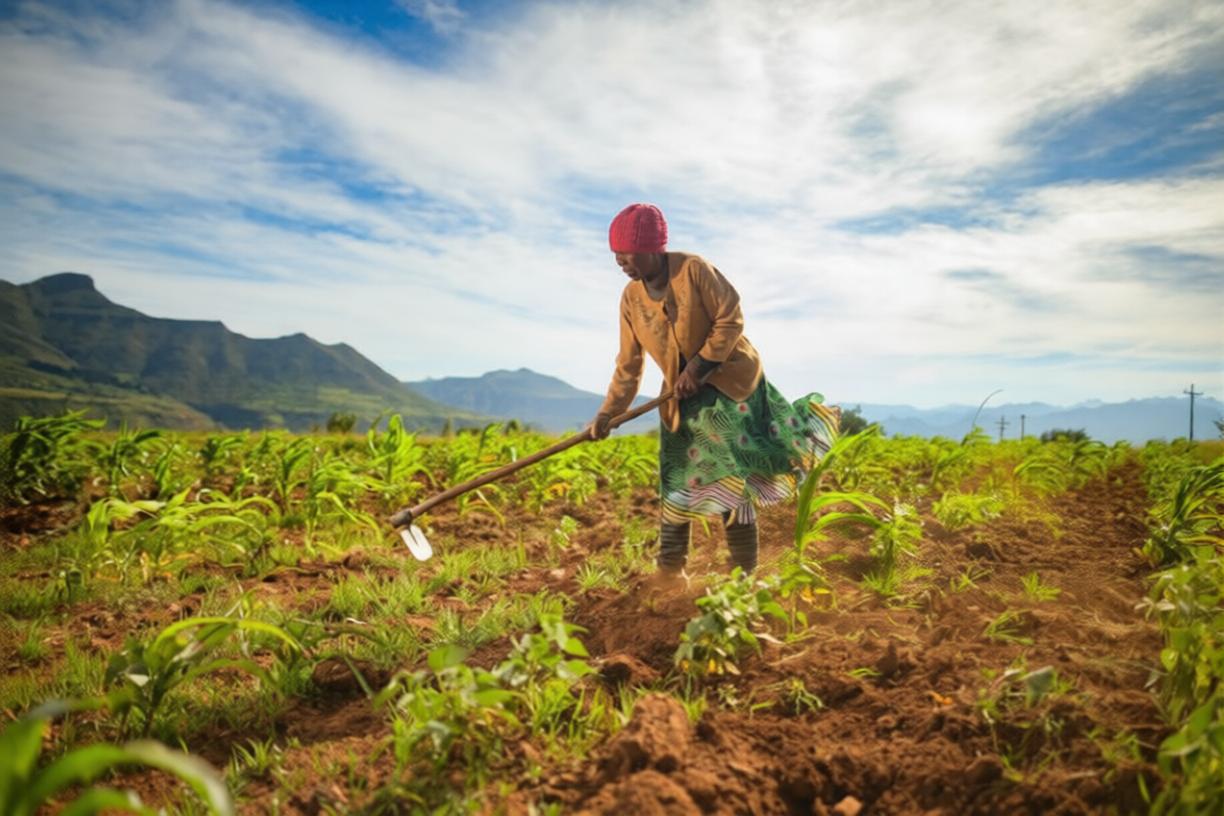
Across Africa, farmers have understood something for generations that modern agricultural science is only now rediscovering: soil is not dirt. It is a living ecosystem, and caring for it is the foundation of every successful harvest. Long before chemical fertilisers arrived on the continent, African communities had developed sophisticated methods to build and maintain soil fertility — methods that remain remarkably effective today.
"The soil is not something we own. It is something we borrow from our grandchildren. Our job is to return it richer than we found it." — Ancient African farming proverb
The Zai Pit Method — Burkina Faso's Gift to the Sahel
In the 1980s, as desertification threatened to consume farmland across Burkina Faso, farmer and innovator Yacouba Sawadogo revived and refined an ancient technique: the zai pit. The concept is simple — dig planting pits 20–30 cm deep during the dry season, fill them with compost and manure, and plant directly into these nutrient-rich pockets when the rains arrive.
The results are remarkable. Zai pits concentrate water directly at the root zone, reduce runoff, and slowly release nutrients. Farmers using zai techniques have reported yield increases of 300–500% compared to conventional planting. The pits also trap windblown seeds, encouraging spontaneous vegetation that further enriches the soil. Today, this technique has spread from Burkina Faso to Mali, Niger, and beyond.
How to apply it at home: Dig pits 25 cm deep and 30 cm wide, spacing them 80 cm apart. Fill each pit one-third full with a mixture of compost, animal manure, and dry plant matter. Plant two or three seeds per pit when the rains begin.
Compost Pit Farming — Rwanda's Kitchen Garden Revolution
In Rwanda, Uganda, and eastern DRC, farmers practice a form of intensive composting known locally as imborera. Kitchen scraps, crop residues, animal manure, and ash are layered in pits or trenches, covered with soil, and left to decompose. Vegetables are then planted directly on top of or around these enriched areas.
The genius of this system is its integration with daily life. Every banana peel, every handful of groundnut shells, every bucket of goat droppings becomes a resource rather than waste. In Rwandan kitchen gardens, these techniques routinely produce enough vegetables to feed a family and generate surplus for local markets.
Green Manure and Cover Crops — Feed the Soil First
Across West Africa, farmers have long understood the value of planting certain crops not for harvest but for the soil itself. Cowpea (Vigna unguiculata), lablab (Lablab purpureus), and pigeon pea (Cajanus cajan) are planted and then cut down and worked into the soil while still green.
These leguminous plants fix atmospheric nitrogen in their roots — nature's own fertiliser factory. Their deep root systems break up compacted soil and draw minerals from deep layers. When turned into the earth, the green plant matter feeds earthworms and soil microorganisms. The result is soil that gets better with every planting cycle.
Charcoal and Ash Enrichment — Africa's Terra Preta
In parts of Ghana, Nigeria, and Cameroon, farmers mix charcoal dust and wood ash into planting beds — a technique strikingly similar to the terra preta created by pre-Columbian peoples of the Amazon. The charcoal acts as a permanent soil amendment that holds water, hosts beneficial microorganisms, and slowly releases nutrients over decades.
Making it at home: Collect charcoal dust from cooking fires (not briquettes). Crush it finely, mix with an equal volume of compost, and work into your garden beds. The charcoal will remain active in your soil for years.
Building Soil the African Way
What unites all these traditional techniques is a philosophy that sees the soil as a living partner rather than an inert medium. African farmers who use these methods are not simply growing crops — they are stewarding an ecosystem. The soil they build today will sustain their grandchildren.
Key takeaway: Soil building is not a one-time act — it is a continuous practice. Every season that you add compost, mulch your beds, or plant a cover crop, you are investing in the fertility your children and grandchildren will depend on.
At Dilulu, we teach these methods in our community workshops across Africa. Contact us to learn more or explore our e-learning courses.
Related articles: Drought-Resistant Gardening · Climate-Resilient Crops · Community Seed Banks