
Daily
Household meals improved
120 m²
Kitchen garden size
150 kg
Produce per season
30%
Income saved
Marie Okumu remembers the season when feeding her children meant choosing between vegetables and school supplies. Today, the 120-square-metre garden behind her home in western Kenya feeds her family every day — and the savings have changed their lives.
A small plot, a big decision
Marie had always grown a little maize and kale, but erratic rains and rising costs made every season a gamble. When a Dilulu community trainer visited her village with a simple question — what would you grow if you could water it reliably? — she decided to change everything.
Training that stuck
Over three months, Marie learned the practices that transformed her plot: keyhole and raised-bed gardening that uses water efficiently, composting that turns kitchen waste into rich soil, and seed saving that ended her dependence on bought seed.
"I used to buy vegetables twice a week. Now I sell them twice a month. The garden feeds us first — and then it pays for itself."
— — Marie Okumu
The results: a harvest that keeps giving
- 150 kg of produce harvested each season
- 30% of household food costs saved
- Year-round vegetables with drip irrigation
- Seed bank of 12 saved varieties shared with neighbours
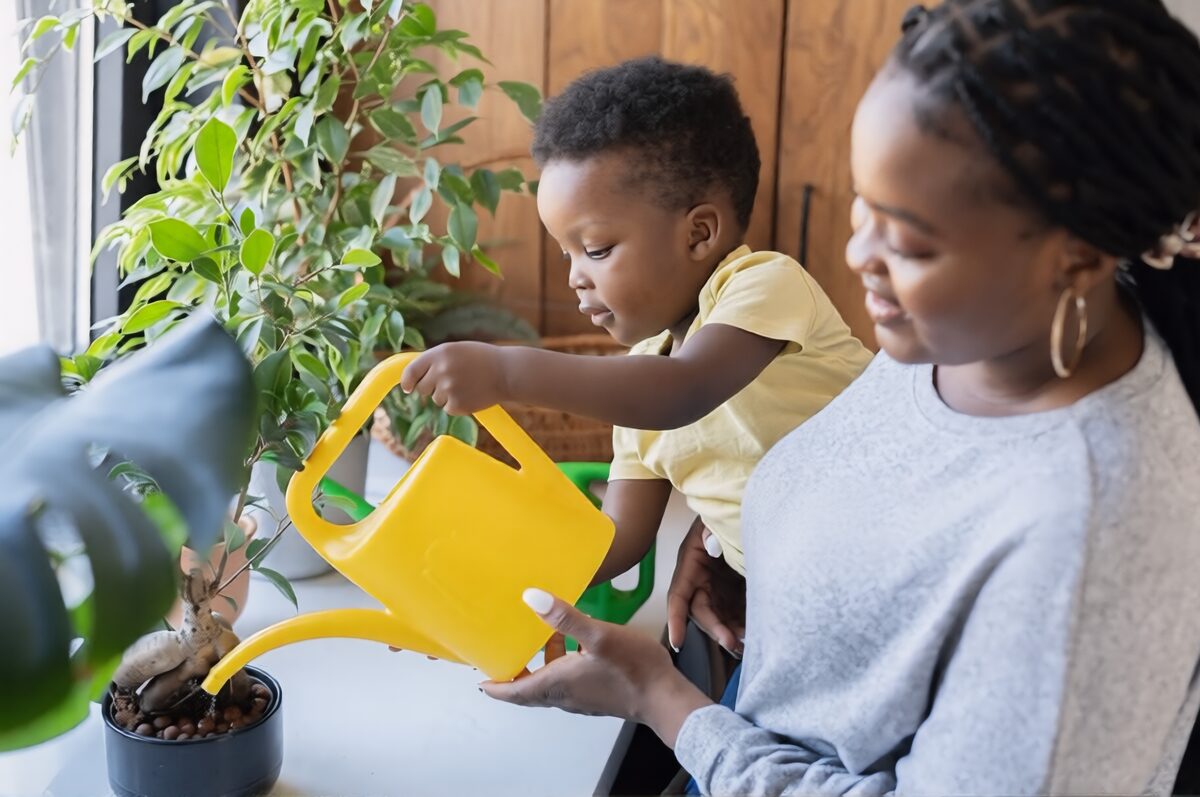
The garden also became a classroom. Marie now teaches her children to plant, and her plot has become a demonstration site where neighbouring families come to learn the same techniques.
Looking ahead
Marie's next goal is a small drip-irrigation system and a second bed for high-value crops. "The garden gave us dignity," she says. "Every seed I save is a promise that next season will be better than the last."
Stories like these grow because people support them
Every gift plants seeds, skills and food security in communities across Africa.
More stories
Urban Gardens Bloom in Libreville
In the heart of Libreville, Gabon's capital, a quiet revolution is growing on rooftops and balconies. Urban gardens are turning city living green — and proving that food security is not only a rural story. The challenge: a city with little space and rising food costs Libreville's residents face a paradox: fertile Gabon, yet expensive, imported produce in the markets. With apartments dominating the city, families had the will to grow food but not the space — or the know-how for container gardening. Containers, balconies and a neighbourhood network Dilulu's urban agriculture program equipped 40 households with container kits — pots, soil mix, seeds and a training manual in French. Monthly workshops covered container planting, balcony sunlight, self-watering systems and pest control for small spaces. "My balcony used to be for laundry. Now it grows tomatoes, peppers and basil — and my daughter thinks every window box is a farm waiting to happen."— — Céline Mba, Libreville participant Results that stack up 40 households gardening in containers 120 containers under cultivation 300 kg of produce grown and shared in one season 25 new kitchen gardens started by neighbours inspired by participants Participants exchange tips — and surplus produce — through a neighbourhood network that keeps the momentum going. Rooftop plots have even become meeting spaces, turning apartment blocks into communities. Looking ahead The program is expanding to community gardens on underused urban land. Libreville is discovering that a city can feed itself, one balcony at a time.
A Women's Cooperative Grows Together
The Koumpentoum women's cooperative started with a half-acre plot, a shared dream and a question nobody could answer: could a group of women grow a community's food security from scratch? Two seasons later, the answer is a thriving two-plot garden, a market stall and sixty families eating better. More than a garden: a cooperative's leap of faith In Koumpentoum, Senegal, the cooperative's 24 members had long grown food for their own households — but each household worked alone, with limited tools and no shared strategy. When Dilulu's community-garden program proposed a shared plot, collective training and pooled harvests, the members took the leap. Learning together, growing together Weekly training sessions covered the practices that made the difference: drip irrigation to stretch scarce water, crop planning to ensure year-round harvests, seed saving for independence, and cooperative bookkeeping so earnings were managed fairly and transparently. "We used to grow food alone and struggle alone. Now we grow together, sell together, and plan together. The garden is our school, our market and our meeting place."— — Fatou Diop, cooperative chair The results 24 women trained in sustainable farming techniques 2 plots under year-round cultivation 60+ families benefiting from the cooperative's harvest +35% market income through a cooperative sales stall Members have reinvested their earnings into a second plot and a seed bank that now holds local, drought-tolerant varieties. The cooperative's garden has become the community's meeting place — and its safety net. Looking ahead The cooperative's next goal is a small storage facility so surplus harvests can be preserved and sold in the dry season. What began as a leap of faith has become a model of collective resilience.